Bone Broth Isn't a Trend. Here's How It Holds Up Across a Woman's Life

Most marketing picks a lane: gut health, or collagen, or postpartum recovery. I think that's exactly why most of it doesn't stick. Your body doesn't pick a lane, and neither should the thing you put in it. So here's how it actually holds up at each stage, and what changed my mind about each one along the way.
In your twenties
Your gut is doing more work than most people realise, and almost nobody is paying it back yet.
You're probably not thinking about collagen. Most women aren't. But your body's own collagen production starts to slow from your mid-twenties, declining roughly 1% per year after that. The gut microbiome you build now sets the terms for a long time after.
Glycine and glutamine, the amino acids bone broth is rich in, are both tied to the integrity of the gut lining. A compromised lining changes how you absorb nutrients, how you manage inflammation, how your skin looks. It's not dramatic. It's quiet and cumulative, which is exactly why it gets ignored.
Then there's protein. Most women underestimate how much they need and feel it as low energy, slow recovery, and a kind of tired sleep doesn't fix. Bone broth protein is complete and easily digested. One scoop in something warm in the morning beats almost everything else marketed at women your age.
This is the cheapest insurance you'll ever buy, and almost nobody buys it in time.
In your thirties
This is where stress stops being a mood and becomes the variable that changes everything.
Your HPA axis, the system that manages your stress response, can only take so much before it adapts in ways that affect everything downstream. Chronic stress is linked to measurable changes in gut bacteria, skin, sleep and hormones. I know this personally. I was diagnosed with HPA-axis stage 3 burnout and very low beneficial gut bacteria in my thirties. It crept up. I didn't see it coming.
"I didn't feel like someone who was burnt out. I was six months postpartum and we'd just moved to Hong Kong. No friends, no family nearby, a new baby. I felt tired and wired at the same time. That's the best way I can describe it. My recovery was holistic. Meditation, sleep, getting my diet right. Bone broth was a big part of it. My practitioner at the time was working with patients with extreme leaky gut who were drinking two or three cups a day. That's when I really understood what it was actually doing."
Here's the part the probiotic aisle won't tell you: stress depletes beneficial bacteria faster than most people expect, and probiotics need something to feed on. The amino acids in bone broth support the gut lining that makes any of it actually work. Buying the bacteria without feeding the lining is half a solution sold as a whole one.
If you want the gut side properly, the Bhone belly page goes into it.
You can't supplement your way out of burnout, but the right foundation makes everything else you try actually land.
Through pregnancy
Collagen demand climbs sharply during pregnancy. Glycine requirements go up considerably, and most pregnant women don't meet them through diet alone. The amino acid profile of bone broth is one of the more useful things you can add here, partly because it's gentle, and partly because it's not another pill to swallow.
My introduction to bone broth came through reading The First Forty Days by Heng Ou, a book about postpartum recovery rooted in Asian tradition. Living in Hong Kong, I could see it around me. There's a reason women across Asia have relied on bone broth after birth for generations. This isn't trend-driven. It's a long-established understanding of what a postpartum body actually needs, and the science is only now catching up to what those traditions already knew.
I trust a practice that's survived a thousand years more than a hero ingredient that launched last quarter.
After birth
Postpartum is its own conversation. The hair loss that shows up around three to four months after birth is one of the things nobody really prepares you for. It's a hormonal-driven shedding, but protein and amino acid depletion plays a real role in how the follicles recover afterward. Hair is built from keratin, which relies on the same building blocks as collagen: primarily glycine and proline. Getting both back in consistently is what moves the needle.
"Postpartum hair loss was a big one for me. My hair had always been my crowning glory. When it started falling out, my husband said the house looked like a Rodney Wayne hair studio. Not funny at the time. But hair thickness and growth is now one of the first things I hear from customers when they start taking Bhone. It tends to happen quickly, and it's one of the changes women notice most."
Getting enough protein during this stage without having to think about it matters too. One scoop in warm milk is two minutes. That's the version that actually works when you have a newborn, and the version that survives real life is the only version that counts.
The supplement that requires a routine you don't have is the one you'll quit. Two minutes is the whole strategy.
In perimenopause and beyond
Collagen loss accelerates from perimenopause onward. This is the stage I haven't reached yet, but it's the one I'm building the habit for now, because by the time you notice it in your joints and skin it's already well underway. Then come gut changes that don't seem connected to anything, but usually are.
The standard advice treats all of this as separate problems. Collagen for skin. Calcium for bones. Fibre for digestion. I'm not convinced your body sees those as separate, and the research on the gut-skin axis suggests it doesn't. Bone broth supports the gut lining and collagen in the same cup, which is something the four-product supplement aisle isn't built to do, because it isn't built to.
My mum is 67. She has a Bhone hot chocolate most evenings. That's not me pushing product at my own mother. It's that the ingredients are genuinely relevant to her, and she can feel the difference.
The single-ingredient aisle is designed to sell you four things. Your body just wants the building blocks in a form it can use.
Why it works across every stage
The product doesn't change. What changes is the reason it matters to you right now.
That's what I set out to build. Not something for one kind of woman at one point in her life, but something that holds up across all of them, because the body's need for collagen, gut support and quality protein doesn't disappear at any stage. It just changes shape.
I don't think a supplement should quietly expire from your life the way most do. That's the whole point of Bhone.
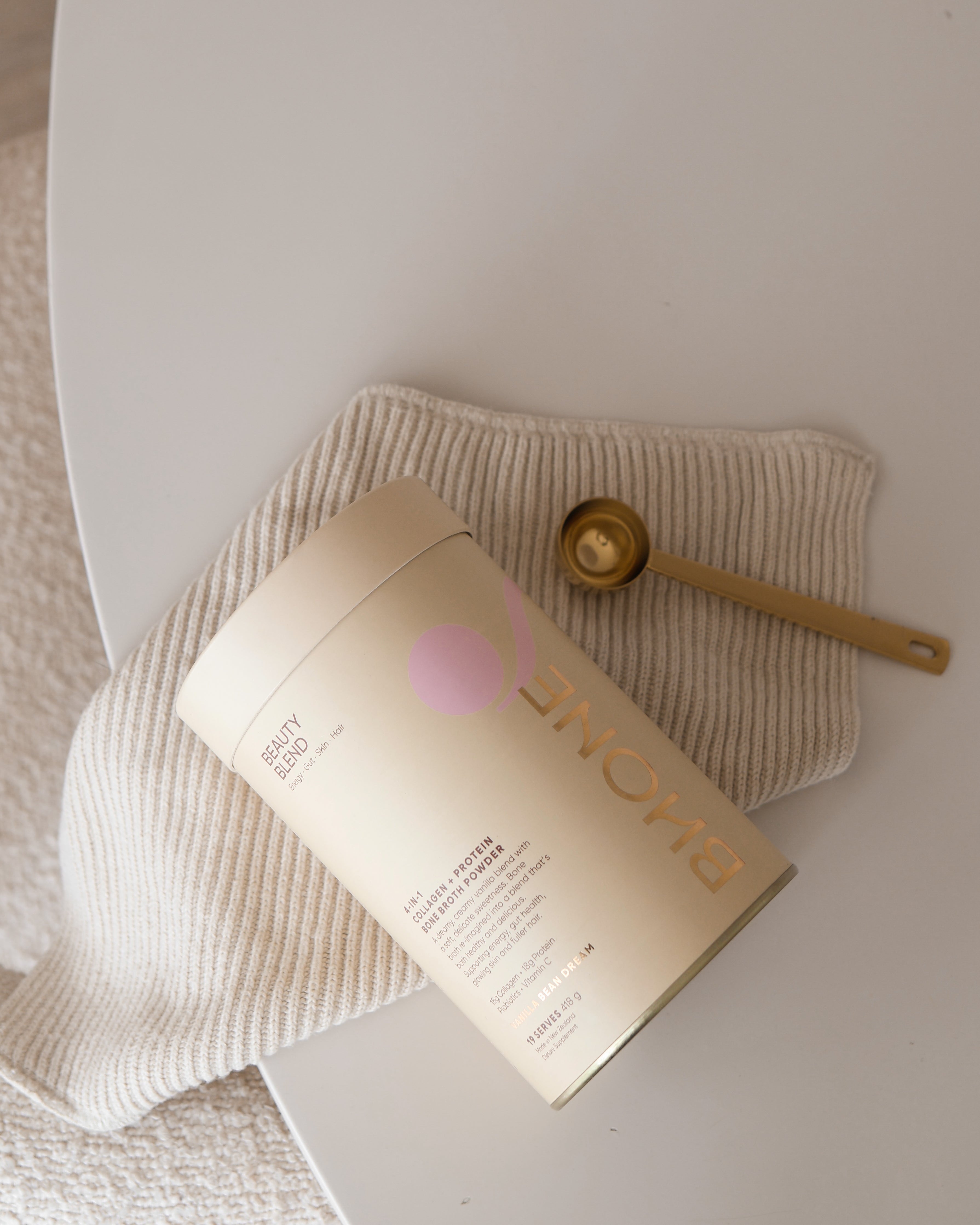
The full range is here if you want to find what fits your morning. The Bhone benefits page has the breakdown of what's in each scoop and why.
I think about my mum having her hot chocolate most evenings, and I think about the woman who'll be where she is in twenty years. The foundations are the same. It's just the reasons that shift.
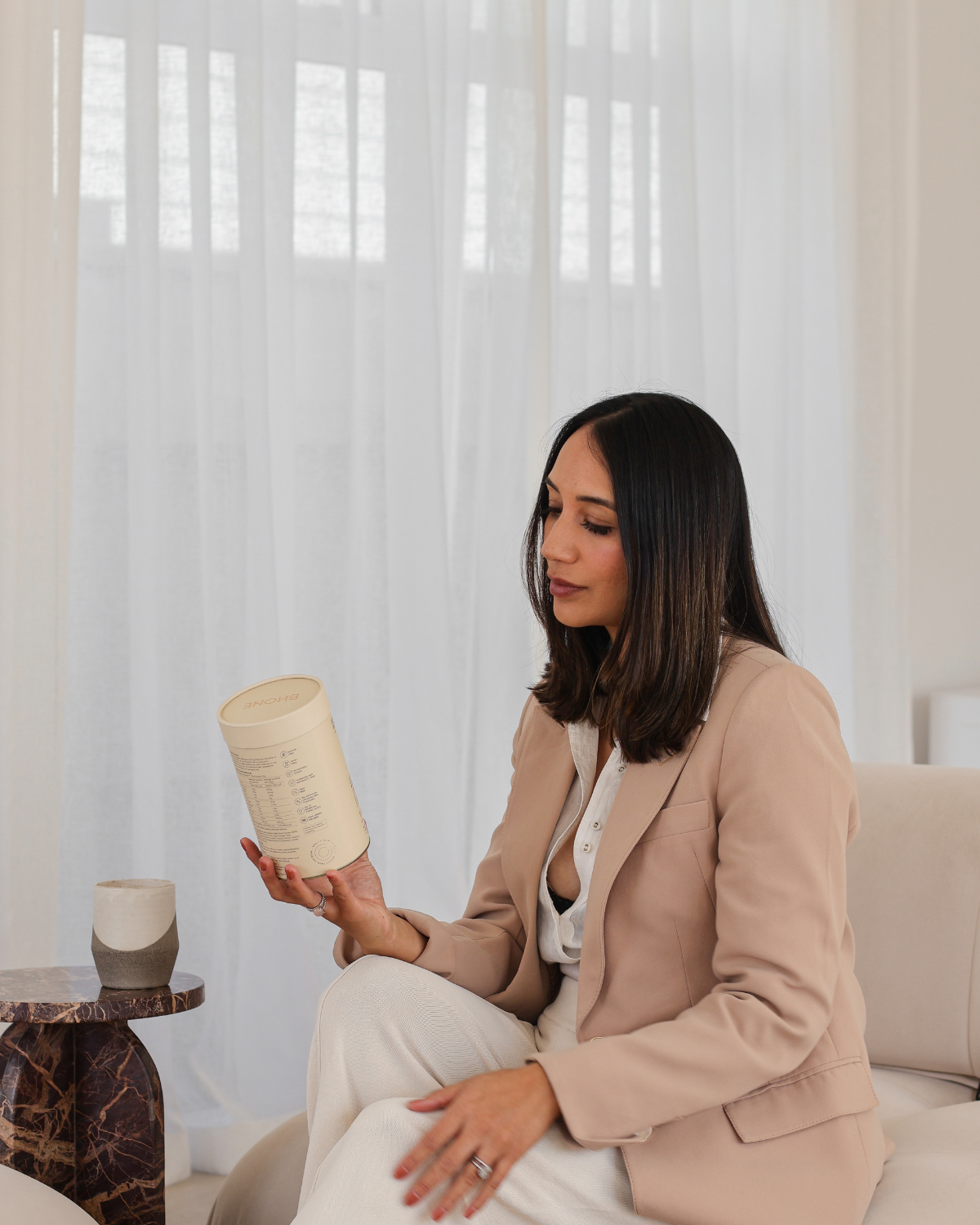
Renei x
References
- Proksch, E. et al. (2014). Oral supplementation of specific collagen peptides has beneficial effects on human skin physiology. Skin Pharmacology and Physiology.
- Meléndez-Hevia, E. et al. (2009). A weak link in metabolism: the metabolic capacity for glycine biosynthesis does not satisfy the need for collagen synthesis. Journal of Biosciences.
- Madison, A. & Kiecolt-Glaser, J.K. (2019). Stress, depression, diet, and the gut microbiota. Current Opinion in Behavioural Sciences.
- Guo, E.L. & Katta, R. (2017). Diet and hair loss: effects of nutrient deficiency and supplement use. Dermatology Practical & Conceptual.
- Choi, F.D. et al. (2019). Oral collagen supplementation: a systematic review of dermatological applications. Journal of Drugs in Dermatology.
Further reading: Ou, H. (2016). The First Forty Days: The Essential Art of Nourishing the New Mother. Stewart, Tabori & Chang.